Thursday, 20 August 2015

Varicocele

Varicocele is one of the disease affected to the scrotum. It is the abnormal enlargement of the veins in the scrotum or swelling of the veins inside the scrotum. .  Testicular which is a part of spermatic cord originate in the abdomen and  course down to  testis through the  inguinal canal.  There is a small one way valve to prevent backflow of blood. Varicocele will affect in one testicle or in both.

in most case it is seen in the left testicles.  A one id testicle will be affected in both. blood has high temperature that increases the temperature of the tests that will leads to infertility because the increased temperature will affect to the sperm. Mainly this disease will affect the men who is aged between 15 to 25. 

 vericocele

Symptoms of Varicocele

   1. Enlarged and twisted veins are visible.

   2. Scrotal swelling will be occur without pain.

   3. Infertility.

   4. Lump disappears when horizontal

    5. Testicular Atrophy


Varicocele can be diagnosed by using ultrasound  which is a physical examination. Varicocele will make the scrotum look lumpy.  Varicocele symptoms clearly not present.

We can detect varicocele by using venogram an x-ray which a special dye is injected into the veins.

The varicocele surgery is performed after a anesthesia.  In this type of varicocele treatment, best urologist makes an incision above the scrotum and cuts through the layers of tissue to expose the veins and the affected veins are ligated.

 contact us


Mail us: urologistbangalore@gmail.com
Website: http://www.best-urologist-doctor.com

Thursday, 26 March 2015

Prostate Cancer Treatment In Bangalore


                                "Prostate Cancer – A Detailed Study"

https://www.best-urologist-doctor.com/uro-oncology-prostate-cancer.html

Have you heard about “Prostate Cancer” before?
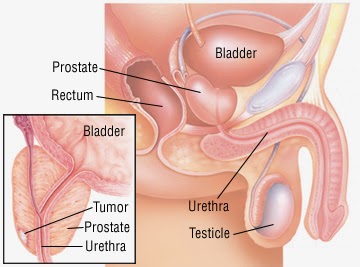
Its a kind of disease that grows slowly in the prostate gland of male reproductive system will leads to dearth in elderly men across the world.
Prostate Cancer Treatment In Bangalore provided by the Eminent and Extremely experienced team of Urologist Bangalore

How it will start?
Prostate cancer that starts when cells in the prostate start to grow in uncontrolled manner. If the disease is identified early then it is very curable. If untreated the prostate cancer spread to the other parts of the body and produce secondary tumours.

https://www.best-urologist-doctor.com/uro-oncology-prostate-cancer.html

Average Rate?
Although 80% of all prostate cancer diagnosed in men over age 65,The risks of Prostate cancer will start after the age of 50 in man.
The Good News!
Over 90% of prostate cancer are curable if detected and treated earliest stages. Early detection is key factor.
How to Diagnose?
  • Digital Rectal Exam
  • Prostate specific antigen test
  • Trans-rectal Ultrasound
Surgery
The main surgery for this cancer is
  • Radical Prostatectomy
  • Hormone therapy
  • Radiation therapy
All these kind of treatment can be treated depends on the several factors such as how faster the cancer is growing,how much it has spread,your overall health as well as the benefits of the treatments.
Dr. Mahendra Jain, one of the Excellent and dedicated Prostate Cancer Surgeon delivering Prostate cancer treatment in India at affordable cost.

https://www.best-urologist-doctor.com/uro-oncology-prostate-cancer/

Monday, 16 February 2015

Treating Prostate Cancer With The Most Advanced And Effective Methods

Prostate cancer is one of the most common type of cancer after the non-melanoma skin cancer. Prostate cancer is cancer that starts in the prostate gland.  It wraps around the urethra, the tube that carries urine out of the body.

Prostate cancer- Symptoms
• Weakness
• Discomfort or Pain and burning sensation during urination
• Frequent urination, especially at night
• Blood during urination
• Impotence
• Pain in the lower parts of the body like upper thighs, back and pelvis
• Disturbance during flow of the urine
• Inability to urinate


Many treatment techniques are used to cure the prostate cancer like Surgeries, Radiotherapy, Biological Therapy, Hormonal Therapy and Targeted Therapy.

Some of the techniques mentioned below:
Surgery
It has been successful for the starting stage of the prostate cancer. The surgery is accomplished when cancerous tissues influence the whole reproductive system of a male. It has several types like Pelvic lymphadenectomy, Retropubic prostatectomy, Perineal prostatectomy, Perineal prostatectomy and Radical prostatectomy. It is usually suggested by the oncologists at the very initial the stage of the prostate cancer.
Chemotherapy
It is another highly effective method for the Prostate Cancer Treatment,which is carried out via drugs or medication procedure. Drugs are planned according to the stage and the type of the cancer. It is usually used with the combination of surgery and radiotherapy for a more successful outcome.

If the prostate cancer has spread, treatment may include:
  • Nerve-Sparing Robotic Radical Prostatectomy

  • Nerve-Sparing Laparoscopic Radical Prostatectomy

  • Perineal Prostatectomy


Dr Mahendra Jain is an eminent and an extremely experienced Urologist and Andrologist residing in Bangalore, India. He has specialized in Endourology, Uro-oncology, Andrology, Impotence and female Urology.He and his team of oncology specialists provide the best Prostate Cancer Treatment in India. Dr. Mahendra Jain currently works as a Consultant Urologist at Fortis Hospitals and at Mahaveer Jain Hospital in Bangalore, India.


E-Mail - urologistbangalore@gmail.com

Saturday, 29 November 2014

Donate Kidney - Save a Life

KIDNEY TRANSPLANTATION


Kidney is the vital organ which plays an important role in entire body homeostasis. The main duty of kidney is to regulate the water in the body and balance the concentration of mineral ions in the blood.


If it is not working properly, the whole body conditions change into a dangerous situation. Severe kidney problem may lead to death of a person. Some kidney problems can be treated without risk. But in some conditions, kidney transplantation is the only way to survive.


Advantages of kidney transplantation

Renal transplantation or kidney transplantation has many advantages, it eliminates the need of dialysis treatment and provide more happiness in life. It gives you back your health and family. So many people back to their work and lead a full life after transplant.


Disadvantages

➤ Transplant rejection

➤ Chance of infections

➤ Imbalance in mineral production

➤ Other side effects of medication

About the Doctor

Dr Mahendra Jain is an eminent and an extremely experienced Urologist and Andrologist residing in Bangalore, India. He has specialized in Endourology, Uro-oncology, Andrology, Impotence and female Urology. The fact that he performs over 600 to 700 complicated urological surgeries in a year speaks volumes about his service to people world over. Most of his surgeries are endoscopic surgeries for renal stone, prostate, bladder tumor, urinary incontinence, renal transplant, impotence and infertility. LSER prostatectomies and RIRS with flexible ureteroscope for kidney stones are common surgeries that he performs on a daily basis. He also heads the department of urology and has two associates working in his team.


For more details : www.best-urologist-doctor.com

E-mail : urologistbangalore@gmail.com

Friday, 14 March 2014

Are You Suffering From Kidney Cancer? New Strategies in Treating Kidney Cancer!!!

                            Recognize and Prevent Kidney Cancer

Kidney cancer is defined as a type of cancer that has risen from the kidney. Anyone affected with cancer faces uncertainty and anxiety. Cancer of the kidney can be divided into two common types - urothelial cell carcinoma(UCC)  and renal cell carcinoma (RCC) of the renal pelvis. The two are based on their location inside the kidney. This is since treatment like surgery, chemotherapy and others can vary in these two types. Childhood kidney cancer is different from the adult kidney cancer.


Signs and Symptoms

Chronic fatigue is the first symptoms when it comes to this disease. Though there are cases wherein no symptoms and signs are present. The common symptoms and signs of kidney cancer are,
  • Chronic fatigue
  • Hydronephrosis
  • Blood in your urine (Hematuria)
  • Palpable mass in the abdomen 
  • Fever and weight loss
  • High blood pressure
  • A pain in your side that doesn't go away
  • A lump in your side or abdomen
  • A loss of appetite
  • Anemia
  • Night sweats
  • Swelling in your ankles or legs
Kidney cancer that spreads to other parts of your body may cause other symptoms, such as:
  • Shortness of breath
  • Coughing up blood
  • Bone pain
Causes and Risk Factors of Kidney Cancer

Factors that can increase the risk of kidney cancer include,
  • Older age
  • Smoking
  • Obesity
  • Diabetes
  • High blood pressure (hypertension)
  • Treatment for kidney failure
  • Von Hippel-Lindau disease
  • Hereditary papillary renal cell carcinoma
  • Tuberous Sclerosis
Methods of Kidney Cancer Treatment

Surgical Treatments:
Surgery is the most common treatment for kidney cancer. It treats cancer in the kidney and the area close to the tumor.
  • Radical nephrectomy
  • Simple nephrectomy
  • Partial nephrectomy
Non-Surgical Treatments:
  • Arterial embolization
  • Radiation therapy
  • Biological therapy
  • Chemotherapy
Preventive Measures

Prevention is always better than cure. Follow these tips to prevent the onset of a kidney disease or infection.
• You can drink alcohol, but in moderation.
• Over-the-counter and prescription medication are used to treated health conditions
• Quit smoking
• Obesity like diabetes and hypertension increases health complications

For more about urology and treatment please visit,
www.best-urologist-doctor.com

If you have any doubts about Kidney cancer treatment procedure then contact Dr. Mahendra Jain through the above site. Or contact him through this mail ID.
Mail ID: urologistbangalore@gmail.com

Feel Free to contact us through online:
https://www.best-urologist-doctor.com/online-appointment.html

Wednesday, 21 November 2012

Retracted Foreskin Problems [Phimosis] for Children and its best treatment


Phimosis

Phimosis is an abnormal tightness of the foreskin or inability to retract the foreskin. It’s a condition in which the foreskin is too tight to pull all the way back. Phimosis is normal in all baby boys and may be present for some years, until the foreskin has become supple enough and stretched enough to be pulled back, so that the head of the penis may be seen completely. In some cases, there may be scarring of the foreskin which may result in a permanent phimosis. The scarring may be caused by infection or inflammation of the foreskin, or forced stretching of the foreskin causing splitting, before it is ready to be stretched. Approximately 10% of boys develop scarring with phimosis. 


Risk factors for phimosis include: 


  • Being uncircumcised
  • Young age
  • Symptoms of phimosis
  • Common symptoms of phimosis include:
  • Bulging of the foreskin
  • Difficulty urinating
  • Inability to pull back the foreskin
  • Pain
  • Swelling of the tip of the penis


How is phimosis treated?

Phimosis in infancy is nearly always physiological, and needs to be treated only if it is causing obvious problems such as urinary discomfort or obstruction. If phimosis in older children or adults is not causing acute and severe problems, nonsurgical measures may be effective. Choice of treatment is often determined by whether the patient (or doctor) views circumcision as an option of last resort to be avoided or as the preferred course. Some men with non-retractile foreskins have no difficulties and see no need for correction. 

Surgical methods:


  • Surgical methods range from the complete removal of the foreskin to more minor operations to relieve foreskin tightness:
  • Circumcision is sometimes performed for pathological phimosis, and is effective.
  • Dorsal slit (superincision) is a single incision along the upper length of the foreskin from the tip to the corona, exposing the glans without removing any tissue.
  • Ventral slit (subterincision) is an incision along the lower length of the foreskin from the tip of the frenulum to the base of the glans, removing the frenulum in the process. Often used when frenulum breve occurs alongside the phimosis.
  • Preputioplasty, in which a limited dorsal slit with transverse closure is made along the constricting band of skin can be an effective alternative to circumcision. It has the advantage of only limited pain and a short time of healing relative to circumcision, and avoids cosmetic effects.


Non surgical methods

Application of topical steroid cream, such as betamethasone, for 4–6 weeks to the narrow part of the foreskin is relatively simple, less expensive than surgical treatments and highly effective. It has replaced circumcision as the preferred treatment method for some physicians.

Stretching of the foreskin can be accomplished manually, with balloons or with other tools. Skin that is under tension expands by growing additional cells. A permanent increase in size occurs by gentle stretching over a period of time. The treatment is non-traumatic and non-destructive. Manual stretching may be carried out without the aid of a medical doctor. The tissue expansion promotes the growth of new skin cells to permanently expand the narrow preputial ring that prevents retraction. Beaugé treated several hundred adolescents by advising them to change their masturbation habits to closing their hand over their penis and moving it back and forth. Retraction of the foreskin was generally achieved after four weeks and he stated that he never had to refer one for surgery. 

Complications of phimosis include: 


  • Difficulty ejaculating
  • Difficulty urinating
  • Infertility
  • Recurrent infections
  • Scarring of the penile opening


For more about urology and treatment please visit,


If you have any doubts about pediatric phimosis treatment procedure then contact Dr. Mahendra Jain through the above site. Or contact him through this mail ID.

Thursday, 11 October 2012

Urology Conditions & Treatments in Bangalore


Urology

Urology is the branch of medicine that deals with the diagnosis and treatment of disorders of the urogenital system or urinary system.

Urological Conditions

Conditions & Treatments:

Uro-Oncology

Uro-oncology is the field of medicine and treatment of cancers of the urinary system for both male and female.

Conditions & Treatments:

Male Urology

Male urology includes the urological problems of a man. Most of the male, experiencing problems with erectile dysfunction, urination, incontinence, infertility or other prostate or genitourinary problems.

Conditions & Treatments:

Female Urology


Female urology is concerned with the diagnosis and treatment of urinary tract disorders most common in females. 

Conditions & Treatments:


Pediatric Urology

Pediatric urology is a medicine dealing with the disorders of children's genitourinary systems.

Conditions & Treatments:


For more details visit: www.best-urologist-doctor.com